
PRODUCT BACKLOG MANAGEMENT
Organize product requirements, ideas, improvements, and technical work into a focused and actionable backlog.
Product Backlog Management
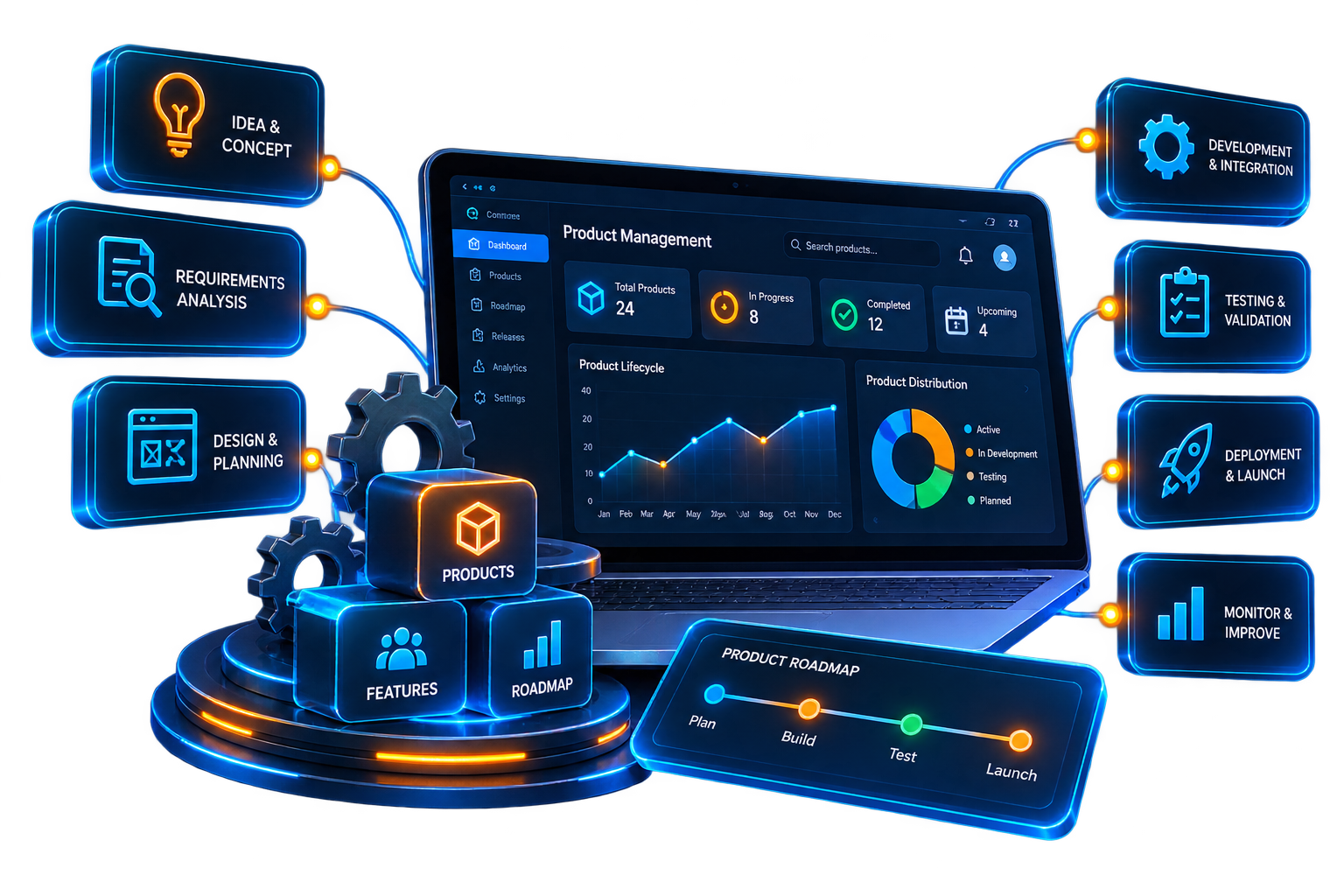
Organize product requirements, ideas, improvements, and technical work into a focused and actionable backlog. Our product management approach connects strategy, customer insight, execution, and measurable outcomes to help organizations build and improve successful digital products.
-
Define clear objectives and requirements for product backlog management.
-
Align customer needs, business priorities, and delivery activities around product backlog management.
-
Use structured planning, measurable outcomes, and continuous feedback to improve results.
-
Create a scalable approach that supports long-term product success and operational efficiency.
A Step-by-Step Guide to Effective Product Backlog Management
Effective product backlog management helps teams maintain a clear, prioritized, and actionable list of product requirements and work items. A well-managed backlog provides visibility into upcoming work while keeping development efforts aligned with customer and business priorities.
-
Collect Requirements: Gather feature requests, customer feedback, technical improvements, defects, business requirements, and new product ideas.
-
Create Backlog Items: Convert requirements and ideas into clear and understandable user stories, tasks, enhancements, or technical work items.
-
Define Acceptance Criteria: Establish clear conditions that describe when a backlog item can be considered complete and acceptable.
-
Prioritize the Backlog: Rank items according to customer value, business impact, urgency, effort, risk, dependencies, and strategic importance.
-
Estimate Effort: Work with development teams to understand complexity, resources, dependencies, and expected implementation effort.
-
Refine Backlog Items: Regularly review requirements to remove ambiguity, split large items, and ensure upcoming work is ready for development.
-
Plan Releases and Sprints: Select appropriate backlog items for upcoming iterations and connect them with product roadmap objectives.
-
Review and Update: Continuously adjust backlog priorities based on customer feedback, product analytics, business changes, and delivery progress.
Key Critical Factors for Successful Product Backlog Management
A successful product backlog should provide teams with a clear understanding of what needs to be built, why it matters, and when it should be considered. Consistent backlog management improves prioritization, planning, communication, and delivery efficiency.
-
Clear Requirements: Write backlog items that are specific, understandable, and connected to real customer or business needs.
-
Effective Prioritization: Keep the most valuable and strategically important work at the top of the backlog.
-
Regular Refinement: Continuously review, clarify, split, remove, and reprioritize backlog items.
-
Customer Focus: Use customer needs, feedback, and product usage data to guide backlog decisions.
-
Technical Alignment: Include technical debt, architecture improvements, security requirements, and infrastructure work where necessary.
-
Stakeholder Alignment: Maintain visibility and agreement across product, development, QA, business, and other relevant teams.
-
Measurable Outcomes: Connect important backlog items with expected product and business outcomes.
Looking for Product Backlog Management solutions?
Create a structured and prioritized product backlog that keeps teams focused on customer value, business objectives, and efficient delivery.
Contact UsCommon Product Backlog Management Challenges and How to Address Them
Product backlogs can quickly become difficult to manage when teams collect too many requests, lack clear priorities, or fail to regularly refine requirements. Addressing these challenges helps maintain a focused and useful backlog.
-
Overloaded Backlog: Regularly remove obsolete, duplicate, or low-value items to keep the backlog manageable.
-
Unclear Requirements: Add sufficient descriptions, acceptance criteria, business context, and expected outcomes.
-
Competing Priorities: Use consistent prioritization criteria to make transparent decisions between different requests.
-
Large Backlog Items: Break complex requirements into smaller, manageable, and independently deliverable items.
-
Frequent Priority Changes: Review changes carefully and communicate their impact on roadmap and delivery plans.
-
Lack of Technical Work: Include technical debt, performance improvements, security work, and infrastructure requirements in the backlog.
-
Poor Stakeholder Visibility: Maintain clear backlog information so stakeholders understand current priorities and upcoming work.
Backlog Prioritization and Product Value
Prioritization is one of the most important aspects of backlog management. Teams need to determine which work provides the greatest value and should receive development attention first. A value-focused backlog helps prevent resources from being spent on low-impact work.
-
Evaluate customer impact and the number of users affected by each requirement.
-
Consider revenue, retention, conversion, efficiency, and other business outcomes.
-
Assess development effort and technical complexity before assigning priorities.
-
Consider dependencies that may affect the order in which work should be delivered.
-
Balance short-term improvements with long-term strategic product initiatives.
Backlog Refinement and User Story Management
Backlog refinement keeps upcoming work understandable, prioritized, and ready for development. Regular refinement sessions help product and technical teams identify missing information, clarify requirements, and reduce uncertainty before implementation begins.
-
Review upcoming user stories and requirements with the development team.
-
Clarify acceptance criteria and expected product behavior.
-
Split large or complex stories into smaller deliverable units.
-
Identify missing dependencies, technical constraints, and external requirements.
-
Estimate effort and confirm that high-priority items are ready for upcoming development cycles.
Want to improve your product backlog?
Keep requirements clear, priorities focused, and development teams aligned with a continuously refined and actionable backlog.
Get StartedProduct Backlog and Sprint Planning
A well-maintained product backlog provides the foundation for effective sprint and iteration planning. Development teams can select work based on priority, readiness, capacity, dependencies, and expected outcomes.
-
Maintain a clear ordering of high-priority backlog items.
-
Ensure selected items have sufficient requirements and acceptance criteria.
-
Consider team capacity and technical dependencies when planning work.
-
Connect sprint objectives with broader product and roadmap goals.
-
Review completed work and update future priorities based on outcomes.
Technical Debt and Backlog Management
Product backlogs should not focus only on customer-facing features. Technical debt, architecture improvements, security updates, performance enhancements, infrastructure work, and maintenance activities can also have a significant impact on product quality and long-term scalability.
-
Identify technical debt that could affect product stability or development speed.
-
Include important architecture and infrastructure improvements in the backlog.
-
Prioritize security and performance improvements according to their business and technical impact.
-
Balance technical work with customer-facing product improvements.
-
Track technical initiatives as part of the broader product roadmap.
Build a More Actionable Product Backlog
Combine customer requirements, business priorities, technical work, dependencies, and measurable outcomes into a focused product backlog.
Talk to Our ExpertsHow to Measure Product Backlog Management Effectiveness
Measuring backlog management effectiveness helps product teams understand whether their backlog is healthy, prioritized, actionable, and aligned with product objectives. Useful measurements should focus on quality, delivery readiness, and business value.
-
Backlog Health: Monitor outdated, duplicate, incomplete, or low-value backlog items.
-
Requirement Readiness: Track how many upcoming items have clear descriptions and acceptance criteria.
-
Priority Alignment: Evaluate whether delivered work consistently reflects the highest product priorities.
-
Delivery Predictability: Compare planned backlog work with completed work across development cycles.
-
Customer Outcomes: Measure whether delivered backlog items improve customer experience, adoption, engagement, or satisfaction.
-
Business Outcomes: Evaluate revenue, retention, conversion, efficiency, and other expected product results.
Continuous Improvement of Product Backlog Management
Product backlog management is an ongoing process. As customer needs, business strategies, product priorities, and market conditions change, the backlog should evolve accordingly. Continuous improvement keeps product teams focused on meaningful and achievable work.
-
Regularly remove obsolete or duplicate backlog items.
-
Reprioritize work based on customer feedback, analytics, and business changes.
-
Improve user stories and acceptance criteria based on development team feedback.
-
Review completed features against their expected customer and business outcomes.
-
Balance new feature development with technical debt and product maintenance.
-
Maintain a transparent and repeatable backlog management process.
Manage Your Product Backlog with Greater Clarity
From requirement collection and refinement to prioritization, sprint planning, technical work, measurement, and continuous improvement, create a product backlog that supports efficient product delivery.
Contact UsPRODUCT BACKLOG MANAGEMENT
Organize, refine, prioritize, and maintain product requirements, user stories, technical work, and improvements in an actionable backlog.
Learn MoreBACKLOG & ROADMAP ALIGNMENT
Connect backlog priorities with product strategy, roadmap objectives, customer needs, development capacity, and measurable business outcomes.
Learn More