
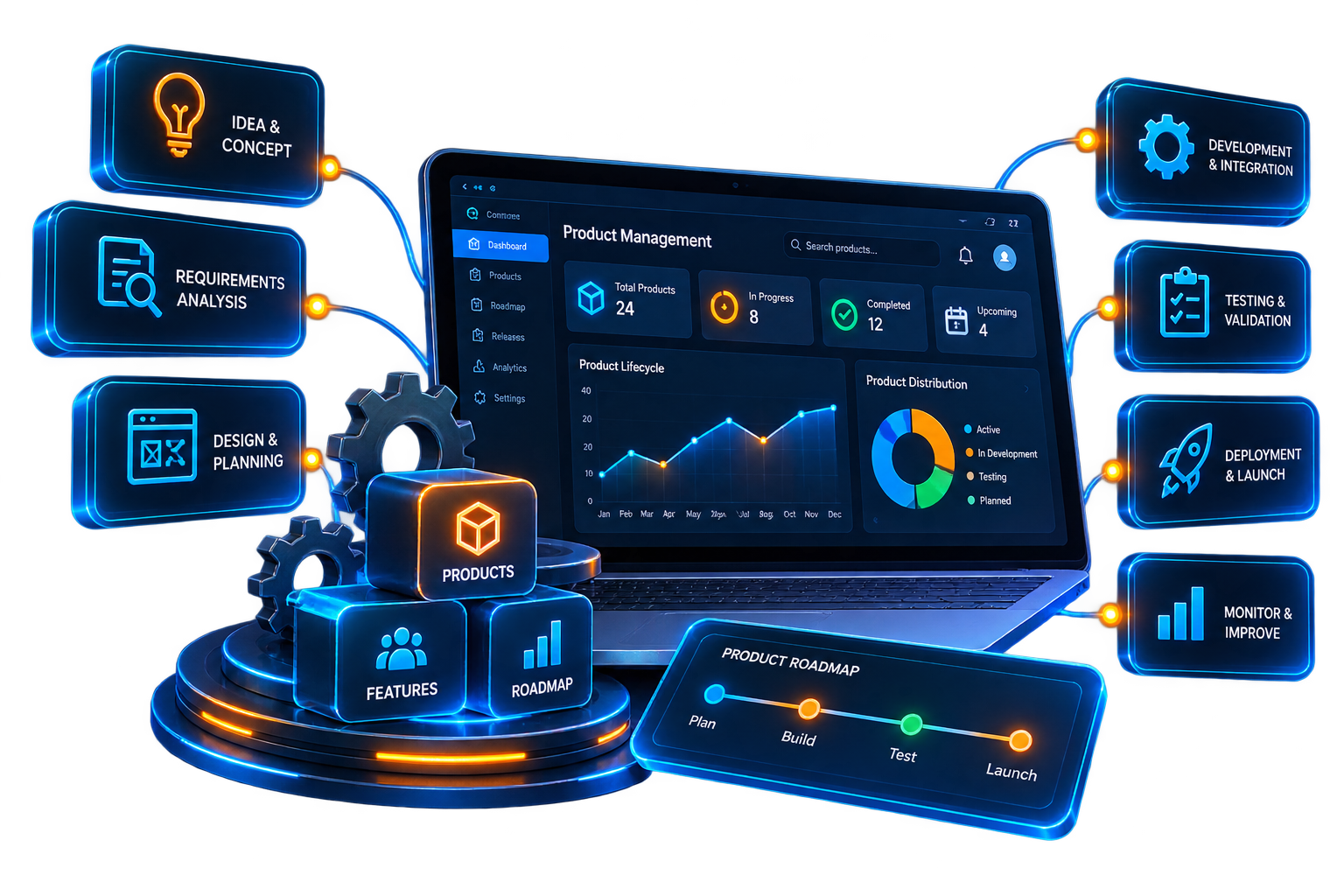
PRODUCT LAUNCH PLANNING
Coordinate launch objectives, timelines, readiness activities, stakeholders, and success measures.
Product Launch Planning
```Coordinate launch objectives, timelines, readiness activities, stakeholders, and success measures. Our product management approach connects strategy, customer insight, execution, and measurable outcomes to help organizations prepare effectively and deliver successful product launches.
-
Define clear objectives and requirements for product launch planning.
-
Align customer needs, business priorities, and delivery activities around product launch planning.
-
Use structured planning, measurable outcomes, and continuous feedback to improve results.
-
Create a scalable approach that supports long-term product success and operational efficiency.
A Step-by-Step Guide to Effective Product Launch Planning
```Product launch planning provides a structured framework for coordinating the activities required before, during, and after a product release. A strong plan ensures that product teams, business teams, customer-facing teams, and stakeholders are aligned around common launch objectives.
1. Define Launch Objectives: Establish clear goals for the product launch, such as market entry, customer acquisition, adoption, revenue generation, awareness, or expansion.
2. Define Target Customers: Identify the customer segments the product is intended to serve and understand their needs, expectations, challenges, and purchasing behavior.
3. Establish Launch Scope: Define the product features, markets, regions, customer segments, channels, and activities included in the launch.
4. Create a Launch Timeline: Establish important milestones, deadlines, dependencies, release dates, communication activities, and post-launch review points.
5. Define Stakeholder Responsibilities: Assign ownership across product, engineering, marketing, sales, customer success, support, operations, and other relevant teams.
6. Validate Product Readiness: Confirm that development, testing, quality assurance, documentation, security, infrastructure, and operational requirements are completed.
7. Prepare Launch Materials: Develop marketing content, sales materials, product documentation, customer communication, training resources, demonstrations, and support information.
8. Conduct a Launch Readiness Review: Review open issues, dependencies, risks, resources, customer readiness, and outstanding launch activities before the release.
9. Execute the Launch Plan: Coordinate launch activities according to the approved timeline while maintaining communication across all participating teams.
10. Review Launch Performance: Analyze adoption, engagement, conversion, customer feedback, technical performance, and business outcomes to identify opportunities for improvement.
Key Critical Factors for Successful Product Launch Planning
```A successful product launch requires more than selecting a release date. Teams need to coordinate product readiness, customer needs, marketing, sales, support, technical operations, and business objectives through a clearly structured plan.
-
Clear Objectives: Define measurable goals and expected outcomes for the launch.
-
Product Readiness: Ensure the product is tested, stable, secure, documented, and ready for customers.
-
Timeline Management: Establish realistic milestones and track dependencies throughout the launch process.
-
Stakeholder Alignment: Ensure every team understands responsibilities, expectations, and deadlines.
-
Customer Readiness: Prepare onboarding, documentation, education, and support resources.
-
Risk Management: Identify potential launch risks and establish appropriate mitigation and contingency plans.
-
Success Measurement: Define metrics that can be used to evaluate launch performance.
Looking for Product Launch Planning solutions?
Build a structured launch plan that aligns product readiness, timelines, stakeholders, customer needs, and measurable outcomes.
Get StartedCommon Product Launch Planning Challenges and How to Address Them
```Product launches can become difficult when planning begins too late, responsibilities are unclear, dependencies are not tracked, or teams are not aligned. A structured launch planning process helps identify these issues before they affect the release.
Unclear Launch Scope: Without a clearly defined scope, teams may continue adding requirements close to launch. Establishing clear launch boundaries helps maintain focus.
Unrealistic Timelines: Launch dates that do not account for development, testing, approvals, documentation, and operational readiness can create unnecessary pressure and delays.
Unclear Ownership: Multiple teams may assume another team is responsible for an activity. Assigning clear owners for every important launch task helps prevent missed responsibilities.
Incomplete Product Readiness: A product may be technically developed but still require testing, documentation, monitoring, training, or support preparation before launch.
Communication Gaps: Poor communication can result in inconsistent messaging or missed updates. A structured communication plan keeps stakeholders informed throughout the launch.
Unmanaged Dependencies: Marketing, sales, engineering, infrastructure, and support activities can depend on one another. Tracking these dependencies helps reduce launch delays.
Limited Contingency Planning: Unexpected technical or operational issues can affect a launch. Preparing contingency plans helps teams respond more effectively.
Launch Timeline and Milestone Management
```A detailed launch timeline provides visibility into the activities required to prepare and release the product. Important milestones should cover development, testing, approvals, marketing preparation, sales enablement, customer communication, training, and operational readiness.
Teams should identify dependencies between activities and establish realistic deadlines for each milestone. Regular progress reviews help identify delays early and allow teams to adjust plans when necessary.
-
Define launch milestones and target dates.
-
Identify task dependencies and critical activities.
-
Assign owners to important launch tasks.
-
Track progress against planned milestones.
-
Review and adjust timelines when significant dependencies change.
Want to keep your launch activities on track?
Organize launch milestones, dependencies, responsibilities, and readiness activities through a structured product launch plan.
Discuss Your RequirementsProduct and Market Readiness
```Product readiness ensures that the solution is technically and operationally prepared for customers. Market readiness ensures that customers, sales teams, marketing teams, and support teams are prepared for the product introduction.
Readiness planning should evaluate product quality, performance, security, documentation, infrastructure, customer onboarding, support processes, marketing materials, sales training, and communication requirements.
A structured readiness review helps organizations identify outstanding issues before launch and establish clear criteria for determining whether the product is ready to be released.
Stakeholder Coordination and Launch Communication
```Product launches often involve multiple internal and external stakeholders. Effective coordination ensures that everyone understands the launch objectives, responsibilities, timeline, dependencies, and communication requirements.
A launch communication plan can define what information should be shared, when it should be shared, who should receive it, and which channels should be used.
Consistent communication helps product, marketing, sales, customer success, support, and leadership teams remain aligned throughout the launch process.
Launch Risk Management and Contingency Planning
```Identifying potential launch risks early helps teams prepare appropriate responses. Risks may involve product quality, technical infrastructure, dependencies, resources, customer support, communication, market readiness, or external factors.
Teams can maintain a launch risk register that documents the potential impact, likelihood, owner, mitigation approach, and contingency plan for important risks.
For high-impact risks, clear escalation paths and decision criteria should be established so that teams can respond quickly if an issue occurs during the launch.
Ready to plan your next product launch?
Coordinate your product, teams, timelines, readiness activities, risks, and launch objectives through a structured planning process.
Start Your Launch PlanLaunch Checklist and Operational Readiness
```A comprehensive launch checklist helps teams verify that important activities have been completed before release. The checklist should cover product, technical, commercial, customer, and operational requirements.
-
Product development and testing are completed.
-
Critical defects and launch blockers are addressed.
-
Product documentation and customer resources are available.
-
Marketing and sales materials are prepared.
-
Customer support teams are trained and prepared.
-
Monitoring and operational processes are ready.
-
Launch communications have been reviewed and approved.
-
Post-launch monitoring and response plans are established.
How to Measure Product Launch Planning Effectiveness
```Measuring the effectiveness of launch planning helps organizations understand whether preparation activities are supporting a successful release. Metrics should be connected to the objectives defined at the beginning of the planning process.
-
Launch Readiness: Track completion of critical readiness activities before release.
-
Milestone Completion: Measure whether important launch activities are completed according to the planned schedule.
-
On-Time Delivery: Evaluate whether the planned launch date and key milestones are achieved.
-
Issue Resolution: Monitor the number and severity of unresolved launch blockers and risks.
-
Customer Adoption: Measure how quickly customers adopt the newly launched product or capabilities.
-
Customer Engagement: Track meaningful product usage and customer interaction after launch.
-
Business Outcomes: Measure revenue, acquisition, conversion, retention, or other launch objectives.
Post-Launch Review and Continuous Improvement
```Product launch planning should include a structured post-launch review. Reviewing actual results against the original plan helps organizations understand what worked well and where improvements are required.
Teams can evaluate launch timelines, readiness activities, communication effectiveness, customer feedback, product performance, adoption, support requests, and business outcomes.
Lessons learned should be documented and incorporated into future launch plans, checklists, processes, and team practices. This creates a repeatable framework that improves launch efficiency over time.
By combining structured planning, cross-functional collaboration, customer readiness, risk management, and measurable outcomes, organizations can create more predictable and successful product launches.
PRODUCT LAUNCH PLANNING
Plan product launches with structured timelines, readiness activities, stakeholder coordination, risk management, and measurable launch objectives.
Learn MoreLAUNCH PLANNING & PERFORMANCE
Monitor launch readiness, milestones, customer adoption, engagement, operational performance, and business outcomes to continuously improve future launches.
Learn More