
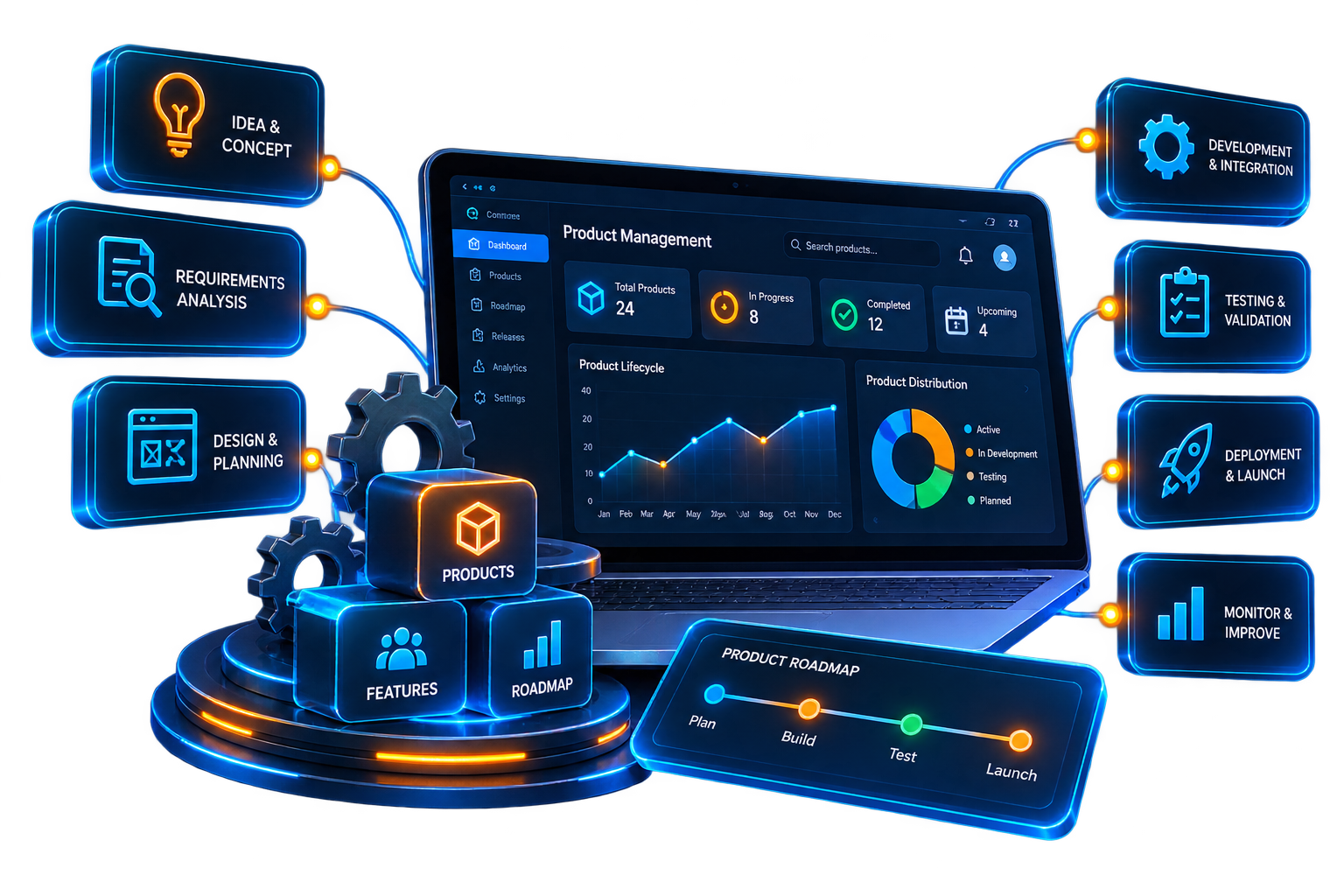
FEATURE PRIORITIZATION
Evaluate features using customer value, business impact, effort, risk, and strategic importance.
Feature Prioritization
Evaluate features using customer value, business impact, effort, risk, and strategic importance. Our product management approach connects strategy, customer insight, execution, and measurable outcomes to help organizations build and improve successful digital products.
-
Define clear objectives and requirements for feature prioritization.
-
Align customer needs, business priorities, and delivery activities around feature prioritization.
-
Use structured planning, measurable outcomes, and continuous feedback to improve results.
-
Create a scalable approach that supports long-term product success and operational efficiency.
A Step-by-Step Guide to Effective Feature Prioritization
Effective feature prioritization helps product teams determine which features should be developed first based on customer value, business impact, effort, risk, and strategic objectives. A structured approach ensures that limited development resources are focused on the highest-value opportunities.
-
Collect Feature Requests: Gather ideas and requirements from customers, stakeholders, sales teams, support teams, product analytics, and market research.
-
Understand Customer Value: Evaluate how strongly each feature addresses customer problems, needs, and expectations.
-
Evaluate Business Impact: Consider the potential contribution of each feature to revenue, growth, retention, efficiency, or strategic objectives.
-
Estimate Development Effort: Work with technical teams to understand complexity, resources, dependencies, and expected delivery effort.
-
Assess Risk: Identify technical, operational, security, compliance, and market risks associated with each feature.
-
Score and Rank Features: Use a consistent prioritization framework to compare features objectively.
-
Create the Product Roadmap: Place prioritized features into appropriate development stages and release plans.
-
Review Regularly: Revisit priorities as customer needs, business objectives, market conditions, and product data change.
Key Critical Factors for Successful Feature Prioritization
Strong feature prioritization requires a balance between customer expectations, business objectives, technical feasibility, and available resources. Clear evaluation criteria help teams make consistent and transparent product decisions.
-
Customer Value: Prioritize features that solve important customer problems or significantly improve the user experience.
-
Business Impact: Consider how features contribute to revenue, growth, customer retention, efficiency, or strategic goals.
-
Development Effort: Compare expected value against the time, resources, and complexity required for implementation.
-
Strategic Alignment: Ensure prioritized features support the product vision and broader business strategy.
-
Technical Feasibility: Consider architecture, technology limitations, dependencies, and implementation complexity.
-
Risk and Uncertainty: Account for potential technical, market, operational, and delivery risks.
-
Data-Driven Decisions: Use customer feedback, product analytics, research, and business data to support prioritization decisions.
Looking for Feature Prioritization solutions?
Focus your product roadmap on the features that deliver the greatest customer value and business impact while making efficient use of development resources.
Contact UsCommon Feature Prioritization Challenges and How to Address Them
Product teams often face competing requests, limited development capacity, changing business priorities, and pressure from multiple stakeholders. A structured prioritization process helps reduce decision-making conflicts and keeps product development focused.
-
Too Many Feature Requests: Categorize and evaluate requests using consistent customer and business criteria.
-
Stakeholder Conflicts: Use transparent prioritization criteria and evidence to create alignment between teams.
-
Limited Development Capacity: Focus resources on high-value features and avoid unnecessary scope expansion.
-
Changing Priorities: Review the roadmap regularly and adjust priorities when meaningful business or customer changes occur.
-
Feature Bias: Support decisions with customer research, product analytics, market information, and measurable evidence.
-
Ignoring Technical Dependencies: Include technical complexity, architecture constraints, and dependencies during prioritization.
-
Difficulty Measuring Value: Define expected outcomes and success metrics before development begins.
Customer Value and Business Impact Analysis
Feature prioritization should consider both customer and business perspectives. A feature may have strong customer value but require significant resources, while another may provide substantial business benefits with relatively low implementation effort.
-
Identify the customer problem addressed by each feature.
-
Estimate the number and importance of customers affected by the feature.
-
Evaluate potential revenue, retention, adoption, or operational benefits.
-
Consider whether the feature supports important strategic objectives.
-
Compare expected value with implementation effort and risk.
Prioritization Frameworks and Scoring
A prioritization framework provides a consistent method for comparing different product opportunities. Teams can evaluate features using factors such as impact, confidence, effort, urgency, strategic value, and customer importance.
-
Define the criteria that will be used to evaluate features.
-
Assign appropriate scores or ratings to each feature.
-
Compare expected impact against development effort and complexity.
-
Consider confidence levels when product information or customer evidence is limited.
-
Use the resulting ranking to guide roadmap and release decisions.
Want to build a focused product roadmap?
Prioritize the right features using customer insights, business goals, technical feasibility, effort, risk, and measurable product outcomes.
Get StartedFeature Prioritization and Product Roadmapping
Prioritized features provide the foundation for an effective product roadmap. Connecting feature priorities with release timelines helps development teams understand what needs to be delivered and why it matters.
-
Connect high-priority features with specific product goals and roadmap themes.
-
Group related features into meaningful releases or development initiatives.
-
Communicate roadmap priorities clearly to internal and external stakeholders.
-
Reassess priorities when new customer insights or business requirements emerge.
-
Keep the roadmap flexible while protecting the most important product objectives.
How to Measure Feature Prioritization Effectiveness
Measuring prioritization effectiveness helps product teams determine whether the features selected for development are actually producing meaningful customer and business outcomes.
-
Feature Adoption: Measure how frequently customers use newly delivered features.
-
Customer Impact: Evaluate whether prioritized features solve important customer problems.
-
Business Outcomes: Track revenue, retention, conversion, efficiency, or other expected business improvements.
-
Delivery Performance: Compare planned development effort and timelines with actual results.
-
Roadmap Success: Evaluate whether completed roadmap initiatives contribute to strategic product objectives.
-
Stakeholder Alignment: Assess whether prioritization decisions create better alignment across product and delivery teams.
Continuous Improvement of Feature Prioritization
Feature prioritization should evolve as the product, customers, market, and business objectives change. Regular reviews help teams improve their decision-making process and ensure that product investments remain focused on the highest-value opportunities.
-
Review feature performance after release and compare results with original expectations.
-
Collect customer feedback and analyze product usage data.
-
Update prioritization criteria when business or product strategy changes.
-
Identify patterns in successful and unsuccessful feature investments.
-
Improve scoring models and prioritization frameworks based on real outcomes.
-
Maintain a transparent and repeatable prioritization process for future product decisions.
Make Better Product Investment Decisions
From customer value and business impact to development effort, risk, roadmap alignment, and performance measurement, build a prioritization process that keeps your product focused on what matters most.
Contact UsFEATURE PRIORITIZATION
Evaluate and rank product features using customer value, business impact, development effort, risk, and strategic importance.
Learn MorePRODUCT ROADMAP OPTIMIZATION
Align product priorities with business objectives, customer needs, delivery capacity, and measurable outcomes for long-term product growth.
Learn More